Use the Speed to Get More Practice
Faster familiar work creates time to explore. Cheaper unfamiliar work makes it possible to finish, learn from the result, and try again.
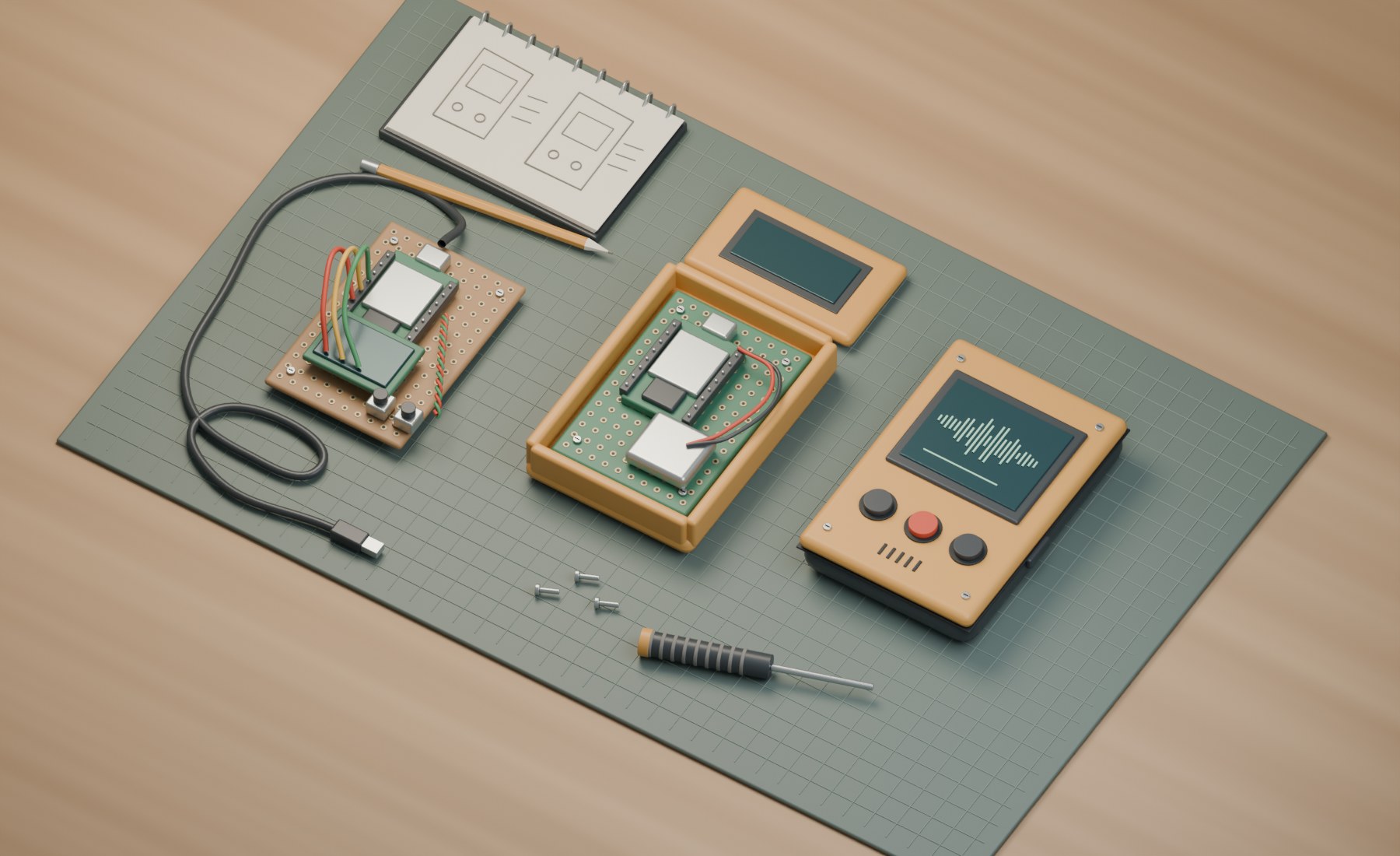
I recently built a small device around an ESP32 board with a display. It connects to my laptop, records my voice for transcription into a prompt, supports playback, and uses Bluetooth to act like a keyboard for sending controls.
Building it meant working through details I had not handled before: styling the display, swapping screens, handling buttons, working inside a single-threaded UI loop, and dealing with input latency. Together, those details were enough that I would previously have expected the project to consume a week of side-project time.
An agent helped establish the flow and work through small bugs quickly enough to reach a functioning device while the idea was still fresh. I still had to try it, notice what felt wrong, and direct corrections. But unfamiliar implementation details did not consume the entire experiment. Finishing gave me confidence about the next project.
That is where I want to spend some of the speed agents provide: getting more reps in work I want to become capable of doing.
Two Costs Came Down
The opportunity starts inside work I already know. Agents make familiar software tasks faster, and my existing expertise helps me evaluate and direct what they produce. Some of that saved time can go toward hardware or 3D work instead of becoming more output in the same specialty.
Then the cost of entering the unfamiliar work falls too. An agent can help establish a starting point, translate an intention into the tool’s vocabulary, and work through routine errors. I can get to the behavior I wanted to explore before spending all my available energy on setup.
Both changes matter. Faster familiar work creates room for an experiment. Lower setup costs make it more likely that the experiment reaches a result worth inspecting. Without the first, the project can keep waiting behind other work. Without the second, the available time can disappear before I reach the interesting part.
Breadth got cheaper because more fields became accessible. The question now is what I carry away from visiting them. A finished result gives me somewhere to begin learning from a decision.
A Matching Set Was The Wrong Goal
Blender made that distinction concrete. I started using it with agent assistance to make visual assets for this blog, extending what I could build beyond CSS and the usual frontend tools.
I liked the original RenderLoom artwork. The assistant then backfilled seven blog illustrations using a matching white porcelain, copper, and blue material style. That produced a consistent set, but seeing it across unrelated articles exposed the problem: the images looked too much alike. I wanted each one to belong to its article.
I briefly mentioned that change in The Website Has to Earn the Visit. The useful part for my own practice was recognizing what my approval had left unspecified. Liking the materials in one illustration did not make those materials a sufficient brief for every other subject.
The next direction started from the article’s action or scene. For the Nord article, that meant replacing the uniform treatment with a nighttime laptop investigation. The article gave the image a setting and a reason to exist beyond matching the rest of the site.
The exit-path article needed another revision. A latch was connected to the idea of an exit, so the first concept had something to work with. But the essay was about being able to leave an interaction without getting trapped. Replacing the latch with an open doorway made the image much more relevant. The clear route out carried the point better than a piece of door hardware.
That correction changed how I would brief the next asset. Start with what the article needs the reader to see, then choose a scene and treatment that communicate it. The approved material style can support that decision; it cannot make it for me.
Carry The Correction Forward
The Blender work developed my ability to direct, inspect, and integrate a 3D workflow. Much of the judgment was editorial: what belongs with this article, what distracts from it, and which visual choice makes its point clearer. The agent handled geometry and rendering while I practiced connecting those choices to the page where the result would live.
They do show a useful repetition. I made a choice, saw its consequence, understood why it fell short, and changed the next choice. Producing seven images was not seven learning cycles by itself. Recognizing the sameness and changing the brief was where the practice became useful.
This is an extension of borrowing fluency: a concrete candidate lets me begin with inspection and revision before I can produce the whole thing unaided. What I retain can be a better question or a sharper criterion, even when the agent still handles the tool operations.
I do not need to memorize every API to benefit. I do need enough understanding to explain why I asked for the next version.
Decide What You Want To Learn
An automatic repair can hide that explanation. If I send every failure back as “fix it” and accept the next successful result, I may finish without understanding the correction. For a disposable task, that can be a reasonable choice. I do not need every use of automation to become a lesson.
When I want a capability I can use again, I want to stay involved in the diagnosis. What happened, why did the change help, and what should I notice earlier next time? The point is to understand the consequential choice without manually repeating every mechanical step.
Fast feedback makes that easier. I can try a button on the device or judge an illustration beside its article. A service’s ownership problems may take six months of operation and change to emerge. Agents cannot bring that lesson forward to this afternoon. The learning gap remains, but more of the short, observable cycles can fit inside the time I have.
Finish With Energy For Another
The ESP32 project left me with a working device and more concrete questions about displays, input, and timing. Blender gave me a way to turn an editorial intention into an asset I could inspect and revise. The next attempt can start with those questions and criteria already in hand.
I used to judge the cost of a new tool largely by what it would take to get started. Now I can think about what I want to make, what the result will let me inspect, and whether I want to go further. Finishing the first attempt with enough energy and confidence for a second changes which ideas I am willing to begin.